
Goods hoists generally make warehouse operations faster and safer by providing a dedicated, mechanically assisted means of vertical transport for heavy or awkward items. This eliminates the need for manual lifting, reducing strain and injury risk, while also allowing for quicker movement of goods between different levels than ramps or forklifts often permit.
1. Ditching the Manual Labor: The Safety Angle
Let’s face it, manual lifting is a back-breaker. Even with proper technique, there’s a limit to what a person can safely lift, and going beyond that limit leads to injuries, fatigue, and slower work. This is where goods hoists really shine in the safety department.
1.1 Reducing Sprains, Strains, and Falls
Think about moving a heavy pallet of stock from the ground floor to a mezzanine. Without a hoist, you might be looking at a forklift, which brings its own set of hazards (tip-overs, collisions, operator error). Or, even worse, trying to manhandle individual boxes up stairs or a ramp, which is a recipe for pulled muscles, slipped discs, and falls. Hoists eliminate a lot of this direct physical risk by doing the heavy lifting for you. Workers guide the load, rather than lifting it.
1.2 Minimizing Collision Risks
Forklifts are fantastic for horizontal movement and stacking, but their vertical capabilities within a multi-level warehouse often involve navigating tight aisles, ramps, or even dedicated lifts designed for vehicles. This increases the chances of collisions with racking, other equipment, or personnel. A goods hoist, on the other hand, operates within a fixed, enclosed shaft or guide system. Its movement path is predictable and contained, significantly reducing the risk of accidental contact with other objects or people in the warehouse. It’s like a dedicated elevator for your stuff, keeping it out of the way of the hustle and bustle on the main floor.
1.3 Ensuring Load Stability
When goods are manually carried or even pushed up a ramp, there’s always a risk of the load shifting, falling, or becoming unstable. Forklifts, while capable, still require careful balancing and can be affected by uneven surfaces or sudden movements. Hoists are designed to lift loads directly and smoothly, often using platforms or cages that keep items contained and stable throughout the vertical journey. This inherent stability prevents goods from toppling, breaking, or injuring workers below. Many hoists also have safety features like overload sensors that prevent lifting beyond safe limits, further ensuring stability.
1.4 Clear Pathways for Personnel
When you’re constantly moving goods manually or even with forklifts between levels, you often end up creating temporary obstructions or hazard zones. Ramps can be slippery or block foot traffic. Forklifts need wide clear paths. A goods hoist, once installed, provides a consistent, dedicated path for materials. This means the rest of your warehouse floor and access points remain clearer for personnel movement and other equipment, reducing general clutter and the likelihood of tripping hazards or bottlenecks.
In addition to exploring how goods hoists enhance the efficiency and safety of warehouse operations, you may find it insightful to read a related article that delves into the broader implications of automation in logistics. This article discusses various technologies that streamline processes and improve safety standards in warehouses. For more information, you can check out the article here: Automation in Logistics: Enhancing Efficiency and Safety.
2. Speeding Up the Workflow: The Efficiency Boost
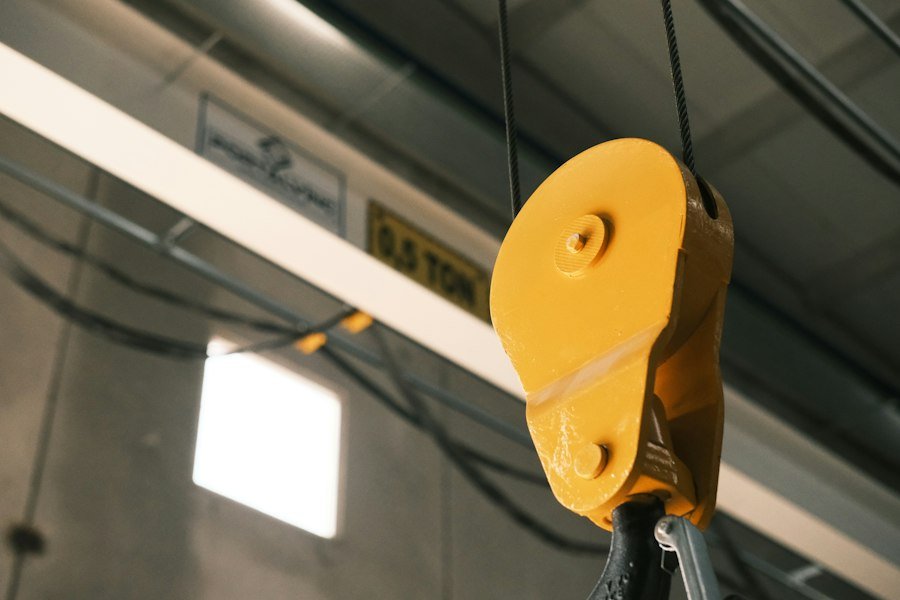
Beyond safety, hoists are major contributors to operational efficiency. When you’re moving goods quickly and smoothly, everything else in the warehouse tends to fall into place more easily.
2.1 Rapid Vertical Transportation
This is perhaps the most obvious benefit. Hoists move items up and down significantly faster than manual methods or even forklifts trying to navigate ramps or dedicated vehicle lifts. Imagine needing to move 20 pallets from a receiving area on the ground floor to a storage mezzanine. Doing that with a forklift might involve multiple trips, careful maneuvering up and down a ramp, and potential waiting time if the ramp is busy. A goods hoist can load a pallet, send it up, and have it ready for offloading in a fraction of the time, often moving at speeds designed for quick turnaround.
2.2 Reducing Congestion and Bottlenecks
Warehouses are busy places, and bottlenecks can kill efficiency. Ramps, in particular, can become choke points, especially if they are two-way or shared with foot traffic. A hoist dedicates a specific, vertical pathway for goods, freeing up floor space and eliminating traffic jams that can occur when forklifts or personnel are all trying to use the same horizontal and inclined paths. This smoother flow means less waiting time for equipment and staff.
2.3 Streamlining Receiving and Dispatch
Think about inbound goods. If your storage is on an upper level, you need a quick way to get items up there from the receiving dock. A hoist positioned strategically near receiving can immediately take incoming pallets or crates directly to the correct level, bypassing ground-level storage entirely if needed. The same applies to dispatch: goods can be brought down directly from storage to a packing or shipping area without complicated routes through the warehouse. This direct point-to-point vertical movement is a massive time-saver.
2.4 Optimized Space Utilization
While not directly about speed of movement, efficient space use indirectly speeds up operations. By allowing easy and fast access to upper levels, hoists make mezzanines and multi-story racking systems much more practical and efficient. This means you can store more goods vertically, reducing the need for sprawling horizontal layouts that increase travel times for forklifts and personnel. More compact storage often translates to shorter picking routes and faster order fulfillment.
3. Different Hoist Types for Different Needs
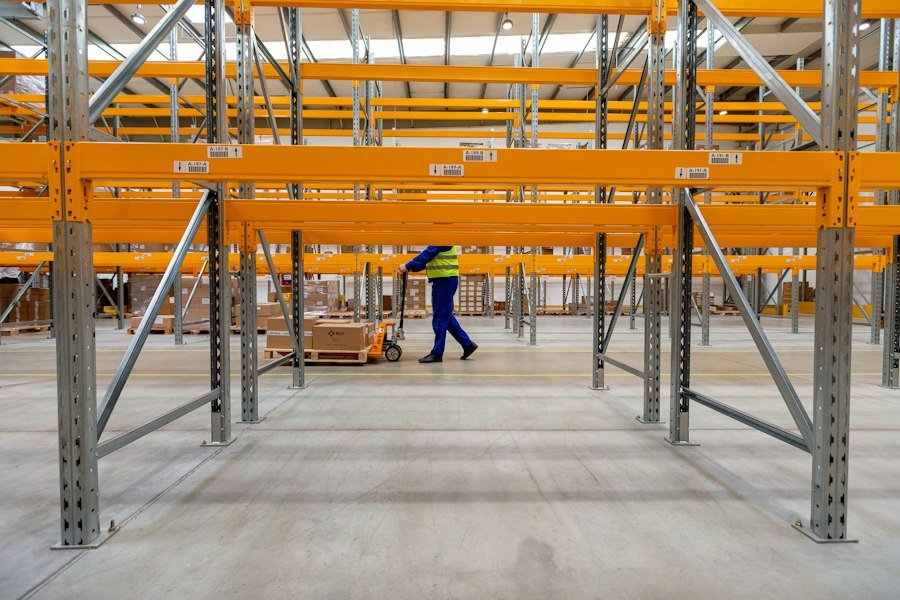
It’s not a one-size-fits-all world. Various goods hoists exist, each suited for particular loads, environments, and operational requirements. Understanding these differences helps in choosing the right tool for the job.
3.1 Dumbwaiters (Small Capacity Hoists)
Don’t let the name fool you; these aren’t just for restaurants. Dumbwaiters are essentially miniature goods hoists designed for lighter loads, typically up to a few hundred pounds. They’re perfect for moving smaller packages, documents, tools, or parts between floors in multi-level warehouses, offices, or even retail backrooms. They are usually compact, have smaller footprints, and operate quickly for these lighter items. Think of them for moving inventory samples, individual components for assembly, or administrative supplies.
3.2 Goods Only Lifts (General Purpose)
These are the workhorses of vertical goods transport. Goods-only lifts, often called freight lifts or goods hoists, are designed to move a wide range of goods, from single pallets to multiple loaded carts. They come in various capacities, from 500 kg to several tons, and with different platform sizes to accommodate common pallet dimensions or roll cages. They typically feature robust construction, safety gates, and are built for continuous, heavy-duty use. These are ideal for general warehouse operations, moving bulk stock between storage levels, or feeding production lines on different floors.
3.3 Platform Hoists (Outdoor/Construction)
While many hoists are enclosed within a building, platform hoists are often seen on construction sites or for outdoor applications. They usually consist of an open platform that travels up a mast, controlled from the ground or the platform itself. While they aren’t strictly for enclosed warehouses, their principles apply to certain industrial settings. They’re good for moving bulk materials, machinery, or building components up the outside of a structure. In a warehouse context, they might be used in specialized outdoor storage areas or for moving large, unusual items where an internal lift isn’t practical.
3.4 Scissor Lifts (Limited Vertical Travel)
Scissor lifts aren’t always thought of as “hoists” in the traditional sense of vertical transport between floors, but they serve a crucial role in vertical movement within a single level or to access elevated platforms. They use a crisscrossing support mechanism to lift a platform vertically. While typically used for personnel access for maintenance or picking, heavy-duty scissor lifts can be integrated into conveyor systems or used as dock lifts to move goods from ground level to truck height or to mezzanine edges. Their strength lies in precise positioning and significant load capacity for smaller vertical distances.
For businesses in Malaysia looking to improve their warehouse efficiency, investing in a goods hoist can be a game-changer. The right goods hoist can significantly reduce manual labor and increase safety. When selecting a goods hoist, it’s important to consider the supplier’s reputation and the equipment’s specifications.
4. Key Considerations When Choosing a Hoist
Selecting the right hoist isn’t just about picking the biggest or fastest. It requires a thoughtful assessment of your specific operational needs, the goods you’re moving, and your facility’s layout.
4.1 Load Capacity and Size
This is fundamental. What’s the heaviest single item or the heaviest typical loaded pallet you need to move? And what are its dimensions? You need a hoist with a safe working load (SWL) that comfortably exceeds your maximum anticipated load. The platform or cage size must also be large enough to accommodate your largest items without excessive overhang or dangerous squeezing. Don’t forget future needs; a little extra capacity can save a lot of headaches down the line.
4.2 Vertical Travel Height
How many floors or how high do you need to go? The total travel distance dictates the type and power of the hoist mechanism required. A hoist designed for a single mezzanine level will be very different from one intended to serve multiple stories in a distribution center. Ensure the hoist you’re considering is rated for your required vertical travel and can maintain operational speed and safety across that distance.
4.3 Speed Requirements
How quickly do you need items to move? For high-throughput operations, a faster hoist might be critical to avoid bottlenecks. For less frequent movements, a slower, more economical option might suffice. Consider the cycle time – loading, travel, unloading – and how that fits into your overall workflow. Faster hoists usually come with a higher price tag, so balance speed with necessity.
4.4 Power Source and Installation
Hoists require power, usually three-phase electricity for industrial models. Do you have the necessary power supply available at the installation point? What are the structural requirements for installation? Many hoists need to be anchored to the building’s structure, and floor loading capabilities need to be assessed. Consider whether you need an enclosed shaft or if an open platform will suffice for your environment and safety regulations. Installation can be a significant part of the project, so factor in space requirements and disruption.
4.5 Safety Features
Beyond basic mechanical integrity, what safety features are built into the hoist? Look for things like interlocked gates that prevent operation if they’re open, overload protection sensors, emergency stop buttons, anti-drop mechanisms, and secure load containment (e.g., solid walls or mesh in a cage). Regular maintenance schedules and easily accessible lockout/tagout points are also important for worker safety during servicing.
4.6 Maintenance and Support
Like any piece of machinery, hoists require regular maintenance to ensure safe and reliable operation. What are the manufacturer’s recommendations for servicing? Is there local support available for parts and technicians? Consider the long-term cost of ownership, including routine checks, wear part replacements, and emergency repairs. A hoist out of commission can be a major disruptor, so reliable support is crucial.
In the fast-paced world of warehouse operations, the implementation of goods hoists can significantly enhance both speed and safety. These innovative systems streamline the movement of heavy items, reducing the risk of injury and improving overall efficiency. For a deeper understanding of how advanced goods hoists can transform operational workflows, you can explore this insightful article on the potential benefits of these systems. By integrating such technology, warehouses can optimize their processes and ensure a safer working environment for all employees. To learn more, visit this article.
5. Integrating Hoists into a Smarter Warehouse
A goods hoist isn’t just a standalone piece of equipment; it’s a component of a larger system. Integrating it thoughtfully can unlock even greater benefits.
5.1 Strategic Placement
Where you put your hoist makes a huge difference. Placing it near receiving docks for inbound goods, adjacent to packing stations for outbound items, or centrally located to serve multiple storage zones will maximize its efficiency. Consider the flow of goods and personnel – you want the hoist to be a smooth part of that flow, not an obstacle or a detour. Think about future expansion or changes in warehouse layout too.
5.2 Complementing Existing Equipment
Hoists work best when they complement, rather than conflict with, other warehouse equipment. For instance, a hoist can significantly reduce the travel distance and time for forklifts that would otherwise have to navigate ramps. Goods can be brought to a floor by a hoist, then picked up by a forklift for horizontal transport to racking. This allows each piece of equipment to do what it does best, creating a more efficient overall system.
5.3 Automation and Controls
Modern hoists can be integrated with warehouse management systems (WMS) or conveyor lines. This can mean automated call functions – a pallet arriving at a conveyor can automatically trigger the hoist to arrive at that level. Or, a WMS can direct where a loaded hoist should deliver its cargo. Simple push-button controls are common, but for higher efficiency, especially in busy facilities, exploring automation possibilities can significantly reduce manual interaction and speed up throughput.
5.4 Ergonomics for Loading and Unloading
While the hoist does the heavy lifting, workers still need to load and unload it. Design the surrounding area with ergonomics in mind. This might include adjustable height tables, pallet jacks, or even small conveyor sections that can present goods at an optimal height for transfer to or from the hoist platform. Reducing repetitive bending or reaching during these crucial steps further enhances safety and efficiency around the hoist.
5.5 Future-Proofing
When investing in a hoist, think about your warehouse’s potential growth. Will your throughput increase? Will you add more levels or change product lines that might require different load sizes? Choosing a hoist with a bit of extra capacity or a modular design that can be adapted can save you from costly upgrades or replacements down the line. It’s about making a smart investment that grows with your business.
FAQs
1. How do goods hoists improve efficiency in warehouse operations?
Goods hoists help to move heavy and bulky items quickly and safely between different levels of a warehouse, reducing the time and effort required for manual handling. This streamlines the workflow and increases productivity.
2. Are goods hoists safe to use in warehouses?
Yes, goods hoists are designed with safety features such as emergency stop buttons, overload protection, and safety gates to prevent accidents. Proper training and regular maintenance also contribute to the safe operation of goods hoists in warehouses.
3. Can goods hoists help in reducing the risk of workplace injuries?
By minimizing the need for manual lifting and carrying of heavy loads, goods hoists significantly reduce the risk of musculoskeletal injuries among warehouse workers. This contributes to a safer working environment and lower rates of workplace injuries.
4. How do goods hoists contribute to space optimization in warehouses?
Goods hoists utilize vertical space efficiently by enabling goods to be transported vertically between different levels of a warehouse. This reduces the need for extensive floor space for ramps or staircases, allowing warehouses to maximize their storage capacity.
5. What types of goods can be transported using goods hoists in warehouses?
Goods hoists are versatile and can transport a wide range of items, including pallets, boxes, equipment, and machinery. They are suitable for various industries such as manufacturing, logistics, retail, and construction, where the movement of heavy goods is required.