
Figuring Out Your Goods Hoist Capacity: The Short Answer
So, you need a goods hoist and you’re wondering about its capacity? The quick and dirty answer is: it entirely depends on what you’re lifting, how much of it you’re lifting, and how often. There’s no one-size-fits-all, but getting it right means smoother operations, fewer breakdowns, and ultimately, saving money and hassle down the line. We’re talking about avoiding overloading, ensuring safety, and optimizing your workflow. Let’s dig a bit deeper into how to nail this crucial decision for your business.
When selecting the appropriate goods hoist capacity for your business, it is essential to consider various factors such as load requirements, frequency of use, and safety standards. For further insights on optimizing your hoist selection process, you may find the article on “Choosing the Right Goods Hoist Capacity for Your Business” particularly helpful. Additionally, if you have specific questions or need expert advice, feel free to reach out through our contact page at here.
Why Getting Capacity Right is a Big Deal

Choosing the correct capacity for your goods hoist isn’t just a technical detail; it’s a fundamental operational decision that impacts safety, efficiency, and your bottom line. An undersized hoist is a recipe for disaster – think breakdowns, safety hazards, and frustrated staff. An oversized one means you’ve wasted money on unnecessary features and power, impacting your budget and potentially increasing running costs.
1. Safety First, Always
This is non-negotiable. Overloading a hoist is incredibly dangerous. It can lead to structural failure, dropping goods, injuring personnel, and causing significant damage to property. Even consistent, slight overloading can accelerate wear and tear, leading to unexpected failures. The safety of your employees and the integrity of your operations should be your absolute top priority. Incorrect capacity can void warranties and insurance policies, leaving you exposed to enormous liability if an incident occurs.
2. Operational Efficiency and Workflow
Imagine your team waiting around because the hoist can’t handle the next batch of materials, or having to split loads, doubling the number of lifts. That’s a huge drag on efficiency. A correctly spec’d hoist ensures a smooth flow of goods, minimizing bottlenecks and maximizing productivity. It means less downtime and more work getting done, which directly translates to better output and happier customers.
3. Cost Implications: Upfront and Ongoing
As mentioned, an undersized hoist will lead to more frequent maintenance, breakdowns, and potential replacement costs. An oversized hoist means higher initial purchase costs, potentially larger footprint requirements, and increased power consumption for a capacity you don’t even need. Finding that sweet spot means you’re investing wisely – getting enough power without paying for excess. It’s about optimizing your capital expenditure and controlling operational expenses.
4. Longevity and Durability of Equipment
Equipment that’s consistently pushed to its limits or beyond its rated capacity simply won’t last as long. Components will wear out faster, requiring more frequent replacements and servicing. This isn’t just about the hoist itself; it can also affect the structural integrity of the building if the hoist’s support systems are improperly spec’d for consistent heavy loads. A hoist operating comfortably within its design limits will provide years of reliable service with minimal fuss.
Practical Steps to Determine Your Hoist Needs
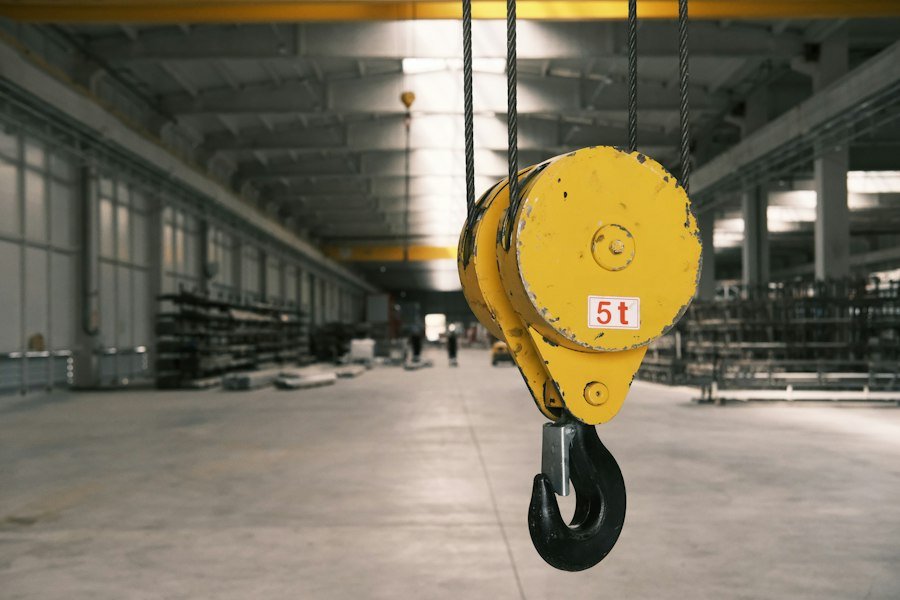
Now, let’s get down to the nitty-gritty. This isn’t guesswork; it’s about systematically evaluating your current and future requirements.
1. Identify Your Heaviest Item
This is your absolute baseline. You need to know the maximum weight of any single item, pallet, or container you’ll ever need to lift. Be realistic and err on the side of caution. If your heaviest item is, say, 1,200 kg, then a 1,000 kg hoist is immediately out of the question. Always factor in packaging, pallets, and any lifting accessories (slings, chains, etc.) that will be part of the total lifted weight. Don’t just consider the product itself.
2. Consider Your Average Load Weight
While the heaviest item sets the minimum capacity, the average load weight helps you understand the everyday demands on the hoist. If your heaviest item is 1,500 kg but 95% of your loads are 300-500 kg, you might choose a hoist with a comfortable margin over 1,500 kg but not something vastly oversized, as that would be inefficient for the majority of your operations. This average load helps inform decisions about duty cycle and motor sizing.
3. Evaluate Your Lifting Frequency (Duty Cycle)
How often will the hoist be used? Is it once an hour, once a day, or almost constantly throughout a shift? This is called the duty cycle. A hoist used continuously will need more robust components, a more powerful motor, and better cooling than one used intermittently. Manufacturers often rate hoists with duty cycle classifications (e.g., FEM/ISO classes). Don’t just pick a capacity; consider how hard and how long the hoist will be working each day.
- Infrequent Use: A few lifts per day, light loads.
- Intermittent Use: Regular use, but with periods of rest.
- Constant Use: Almost continuous operation throughout a shift.
- Heavy Duty/Severe: Multi-shift operation, near-capacity loads frequently.
Ignoring the duty cycle can lead to premature motor burnout, gear wear, and other component failures, even if you stay within the weight capacity.
4. Assess Lift Height and Travel Distance
How high does the hoist need to lift? This affects the length of the wire rope or chain and the power required. Also, consider the horizontal travel if it’s a trolley-mounted hoist. Longer lifts and greater travel distances mean more work for the hoist and require more robust components to handle the stresses over time. If you have multiple floors or very high ceilings, this becomes a critical factor.
5. Factor in Future Growth and Flexibility
This is where many businesses make a mistake. Don’t just buy for today. What are your business plans for the next 5-10 years? Will your product sizes or weights increase? Will your production volume grow? It’s often more cost-effective to invest slightly more upfront in a hoist with a bit of extra capacity than to replace an undersized one a few years down the line. Think about potential new product lines, machinery, or even changes in packaging that could influence load weights. A little headroom can save you a lot of headaches.
For businesses in Malaysia looking to improve their warehouse efficiency, investing in a goods hoist can be a game-changer. The right goods hoist can significantly reduce manual labor and increase safety. When selecting a goods hoist, it’s important to consider the supplier’s reputation and the equipment’s specifications.
Different Types of Hoists and Their Capacity Ranges
The type of hoist you choose also influences capacity considerations. Each has its strengths and typical applications.
1. Chain Hoists
- Capacity Range: Generally from 0.125 tonnes (125 kg) up to around 5 tonnes (5,000 kg), though specialized models can go higher.
- Characteristics: Often more compact, good for precision lifting, lower cost upfront for lighter capacities. Electric chain hoists are very common in workshops and lighter manufacturing.
- Considerations: Slower lifting speeds compared to wire rope, chain can be heavier for manual handling, generally not suited for extremely high lifts due to chain length and weight.
2. Wire Rope Hoists
- Capacity Range: Typically from 1 tonne (1,000 kg) up to 100 tonnes (100,000 kg) or more, especially for custom industrial applications.
- Characteristics: Ideal for heavier loads, faster lifting speeds, higher lift heights, smoother operation. Common in heavy manufacturing, steel mills, and larger warehouses.
- Considerations: Generally more expensive than chain hoists, require more sophisticated maintenance, and rope inspection is critical.
3. Manual Hand Chain Hoists
- Capacity Range: From 0.25 tonnes (250 kg) to around 20 tonnes (20,000 kg).
- Characteristics: Portable, no power required, inexpensive. Good for infrequent use, remote locations, or as backup.
- Considerations: Very slow, requires significant manual effort, unsuitable for high frequency or long lifts. The “capacity” here also refers to the physical effort required.
4. Pneumatic/Air Hoists
- Capacity Range: Similar to electric hoists, often up to 100 tonnes for specialized applications.
- Characteristics: Ideal for hazardous environments where sparks are a concern (e.g., paint booths, chemical plants), intrinsically safe, precise control.
- Considerations: Requires a compressed air supply, can be less energy-efficient than electric, noise levels can be higher.
When selecting the appropriate goods hoist capacity for your business, it is essential to consider various factors such as the weight of the items being transported and the frequency of use. For a deeper understanding of how different lifting solutions can enhance operational efficiency, you may find it helpful to read this insightful article on car lifts and hospital lifts, which discusses various lifting technologies and their applications in different industries. This information can aid in making informed decisions that align with your specific needs.
Common Pitfalls to Avoid in Hoist Selection
Even with all the right information, it’s easy to make mistakes. Be mindful of these common missteps.
1. Underestimating Maximum Load Weight
This is the biggest and most dangerous mistake. People often only consider the weight of the product itself, forgetting the pallet, packaging, and any lifting attachments. Always add a safety margin to your absolute maximum known weight. A good rule of thumb is to calculate your maximum load and then add 10-20% as a safety buffer, assuming the hoist model you choose is precisely rated. However, it’s generally safer to select a hoist from the next standard capacity increment once you’ve determined your absolute maximum. So if your max calculated load is 1.8 tonnes, don’t buy a 2-tonne hoist that will be operating at 90% capacity frequently; consider a 2.5 or 3-tonne model.
2. Ignoring Duty Cycle and Frequency of Use
As discussed, a hoist that theoretically can lift your heaviest load might quickly fail if it’s lifting that load (or even lighter loads) constantly throughout the day. A hoist designed for intermittent use will not hold up to continuous operation. Always discuss your operational tempo with the supplier.
3. Overlooking Environmental Conditions
Will the hoist be used outdoors? In a dusty environment? In extreme temperatures? Near corrosive chemicals? These conditions can significantly impact the hoist’s performance, durability, and required maintenance, potentially necessitating a more robust or specialized model, regardless of the lifting capacity itself. For example, a standard hoist motor might overheat in a very hot environment, or components might corrode in a humid, salty atmosphere.
4. Forgetting About Headroom and Building Constraints
The physical space above your lifting area is critical. Wire rope hoists often require more headroom than chain hoists. Don’t select a hoist that’s too tall for your facility, preventing it from reaching the necessary lift height. Also, consider the structural integrity of the building itself – can your existing beams or gantry system support the weight of the hoist plus its maximum load? This is often an engineering consideration that needs to be assessed by a professional.
5. Not Consulting the Experts
Hoist manufacturers and reputable distributors have a wealth of knowledge. Share all your operational details, future plans, and any constraints with them. They can help you navigate the various options, ensure compliance with safety standards, and recommend the most suitable and cost-effective solution for your specific needs. Don’t just pick a model from a catalog; engage in a proper consultation.
When selecting the appropriate goods hoist capacity for your business, it is essential to consider various factors that can influence your decision. For a deeper understanding of the different types of hoists available and their specific applications, you may find it helpful to explore a related article on the topic. This resource provides valuable insights that can assist you in making an informed choice. To learn more, visit this article for comprehensive guidance on hoist selection and capacity considerations.
Working with Suppliers: What to Discuss
When you’re ready to talk to hoist suppliers, come prepared. The more information you provide, the better and more accurate their recommendations will be.
1. Be Clear About Your Maximum Load
Don’t just give an estimate. State the absolute heaviest weight you ever anticipate lifting, including pallets, packaging, and attachments. Be prepared to back this up with data or examples of your heaviest items.
2. Describe Your Operations in Detail
Explain your typical workday. How many shifts? How many lifts per hour/day? What’s the average load? Is it a production line, a shipping dock, or a storage area? This helps them understand your duty cycle requirements.
3. Outline Your Facility’s Specifics
Provide measurements: lift height, available headroom, travel distance if it’s a moving hoist, and any critical dimensions of the area where the hoist will operate. Mention environmental factors like temperature, humidity, dust, or potential hazards.
4. Discuss Future Growth Plans
Let them know if you anticipate increasing load weights, production volumes, or expanding your facility in the next few years. This foresight can lead to a more future-proof investment.
5. Inquire About Safety Features and Compliance
Ask about standard safety features like overload protection, emergency stop buttons, and limit switches. Ensure the hoist complies with all relevant local and international safety standards and regulations (e.g., OSHA in the US, CE marking in Europe).
6. Maintenance and Support
Understand the warranty, recommended maintenance schedule, and what kind of local support is available for servicing and parts. A great hoist is only great if it can be reliably maintained.
Choosing the right goods hoist capacity isn’t a trivial task. It’s a calculated decision that underpins the safety, efficiency, and financial health of your operations. By systematically assessing your needs, considering future growth, and engaging with knowledgeable suppliers, you can make an informed choice that serves your business well for years to come.
FAQs
What factors should be considered when choosing the right goods hoist capacity for a business?
When choosing the right goods hoist capacity for a business, factors such as the weight and size of the goods being transported, the frequency of use, the vertical distance the goods need to be lifted, and the safety regulations must be taken into consideration.
How does the weight and size of the goods impact the choice of goods hoist capacity?
The weight and size of the goods directly impact the choice of goods hoist capacity as heavier and larger goods will require a hoist with a higher weight capacity to ensure safe and efficient transportation.
Why is it important to consider the frequency of use when selecting a goods hoist capacity?
The frequency of use is important to consider when selecting a goods hoist capacity because a hoist that will be used frequently should have a higher weight capacity to withstand the regular workload and ensure longevity.
What role does the vertical distance the goods need to be lifted play in determining the appropriate goods hoist capacity?
The vertical distance the goods need to be lifted is crucial in determining the appropriate goods hoist capacity as taller heights require hoists with higher weight capacities to safely transport goods without overloading the system.
How do safety regulations influence the choice of goods hoist capacity for a business?
Safety regulations play a significant role in influencing the choice of goods hoist capacity for a business as it is essential to comply with regulations to ensure the safety of workers and goods during transportation. Choosing a hoist with the appropriate weight capacity is crucial to meet safety standards.