
In order to move objects from one place to another, lifting and handling systems use a variety of tools and methods. From manufacturing and construction to logistics and healthcare, these systems are essential to almost every sector of the economy. Their main goal is to get beyond human strength and endurance limitations so that loads that would otherwise be dangerous or impossible can be moved safely and effectively. Consider them a silent but vital collaborator in the production and distribution of goods & services, the painstakingly arranged ballet of forces that makes the modern world possible.
The application of mechanical advantage and force control are central to lifting and handling systems. These systems mainly use physics to automate movement completely or to lessen the effort needed from humans. mechanical benefit. A mechanical device’s ability to amplify force is known as mechanical advantage. Leverage or the use of fluids under pressure are the most common ways to accomplish this in lifting and handling.
For those interested in enhancing their understanding of lifting and handling systems, a related article can be found at USP Corporation’s article section. This resource provides valuable insights into the latest technologies and best practices in the industry, making it an essential read for professionals looking to optimize their operations and improve safety standards.
Pulls and levers. By rotating around a fulcrum, levers—the most basic machines—are used to lift and move heavy objects. The relative distances between the applied force and the resistance from the fulcrum determine the mechanical advantage.
In particular, pulley systems form the basis of many lifting operations. Although the distance over which the force must be applied increases proportionately, the effort needed to lift a given weight can be greatly reduced by setting up multiple pulleys. The design of such systems frequently revolves around this fundamental trade-off. Systems that are hydraulic and pneumatic. In hydraulic systems, force is transmitted by means of incompressible fluids, usually oil.
For reliable lifting and handling solutions, visit our Facebook page.
A much greater force is applied to a larger area, like a piston, when pressure is applied to a small area of fluid because it is distributed equally throughout the fluid. Similar in principle, pneumatic systems use compressed air and have advantages over hydraulics in terms of cost and cleanliness, but their force capabilities are typically lower. From industrial cranes to forklifts, these systems are the foundation of many heavy-duty lifting machines. Control of force and stability.
When exploring the advancements in lifting and handling systems, it’s essential to consider the various products available in the market that enhance efficiency and safety. A related article that delves deeper into these innovations can be found at this link. This resource provides valuable insights into the latest technologies and solutions designed to optimize material handling processes across different industries.
These systems must do more than just produce lifting force; they also need to control and guarantee load stability. Load balancing and gravity centers. Safe lifting requires an understanding of and ability to control a load’s center of gravity.
Because an unbalanced load is inherently unstable, it may tip over or descend uncontrollably. Lifting and handling systems frequently use specialized rigging and attachment points in order to maintain a stable configuration & distribute forces evenly. By ensuring that the load stays a predictable entity rather than a chaotic force, the system functions as an extension of human control. Safety devices and braking. Effective braking systems are essential for preventing loads from moving uncontrollably, particularly when descending or when power is cut off.
Automatic brakes and load-limiting devices are examples of fail-safe mechanisms that are used to reduce the risks of human error or equipment failure. These are the safety nets that keep the ballet going without any unforeseen, spectacular falls. Numerous lifting and handling systems are required due to the wide range of tasks and environments, each of which is tailored for a particular use. Overhead Lifting Devices. Loads are transported through the air by these systems, frequently over considerable heights. Their capacity to suspend and move loads within a specified workspace is what defines them.
Mammals. Among overhead lifting equipment, cranes are perhaps the most well-known. There are many different configurations available.
Bridge cranes are made up of a trolley that travels along a horizontal bridge beam that crosses an area. They are frequently used in factories and warehouses for precise placement of heavy components and repetitive lifting. Imagine a large, well-controlled robotic arm moving silently over the factory floor.
Like bridge cranes, gantry cranes have legs that move on wheels or rails to support the bridge. Because of this, they are perfect for outdoor applications or locations where overhead structures are impractical. They frequently move enormous prefabricated sections in rail yards and shipyards. A horizontal boom, or jib, on a jib crane pivots from a vertical mast. They are employed for localized lifting and moderate load maneuvering in a designated work cell.
They execute precise pirouettes with their loads, making them the agile dancers of the overhead world. Tower Cranes: Typically utilized in the construction of tall structures, tower cranes feature a long horizontal jib & a tall vertical mast. They have the ability to lift incredibly heavy objects to considerable heights. As iconic as a skyscraper itself is their presence on a building site. lifts. The main purpose of hoists is to lift & lower loads vertically.
They are frequently employed as stand-alone devices or combined with other lifting systems like cranes. Electric Hoists: These devices have a high lifting capacity & operate smoothly thanks to electric motors. They consistently raise and lower goods, making them the workhorses of many industrial environments. Manual Hoists: These are appropriate for lighter loads or scenarios without electricity because they are operated by hand chains or levers.
Their use of human strength combined with basic mechanisms is a more basic application of mechanical advantage. Utilizing compressed air, pneumatic hoists are frequently preferred in settings where sparks are an issue or in applications that call for exact speed control. In areas that could be dangerous, they are the silent, accurate operators. Material Handling Equipment.
This category includes a wide range of equipment made for moving and storing materials, frequently at lower heights or in a horizontal plane. Both lift trucks & forklifts. Forklifts are common in distribution centers and warehouses. Palletized goods are lifted and moved using a mast and forks.
Heavy weights in the back are used by counterbalanced forklifts, the most popular kind, to balance the load supported by the forks. They are the nimble warehouse bulldozers. Reach trucks can reach into racking by extending their forks forward, which is a feature designed for narrow aisles.
They are the deft intruders of cramped storage. Order pickers: These devices make it easier to efficiently select individual items from high shelves by enabling operators to move up with the load. In the warehouse, they are the vertical explorers. Systems of conveyors. Conveyors are automated devices that transport goods along a predetermined route, usually on chains, rollers, or belts.
Belt conveyors are frequently used in mining and package handling to move large quantities of goods or single items over long distances. They are the silent rivers of commerce that never stop moving through industrial landscapes. Often used in manufacturing & distribution to ensure the smooth movement of boxes and totes, roller conveyors use a set of rollers to move itemized loads. They resemble small, well-organized product thoroughfares. Chain Conveyors: Suitable for heavier or irregularly shaped items, these conveyors use chains to push or drag loads.
They are the strong, reliable tugs of the logistics industry. Autonomous mobile robots (AMRs) & automated guided vehicles (AGVs). These sophisticated systems move materials around a facility on their own by using sensors and navigation technology. AGVs usually travel along predetermined routes that are indicated by wires or magnetic strips. They follow rigid routes, much like well-trained automatons.
AMRs: More advanced, they are capable of dynamic navigation, avoiding obstructions and making real-time route adjustments. By navigating the industrial maze on their own, they are the astute navigators. specialized tools for handling.
Beyond broad classifications, some applications require extremely specialized systems. The robotic arms. Industrial robots are particularly good at precise, dangerous, or repetitive tasks. A wide variety of lifting, assembly, & manipulation tasks can be programmed for them.
Their arms are the highly trained artisans of automation, capable of complex movements. Lifters that vacuum. Suction is used by these systems to grasp & raise smooth, non-porous materials such as stone, metal sheets, or glass. For large or delicate flat objects, they are the firm yet gentle graspers. Tricksters.
Manipulators assist workers in handling awkward or heavy components, lowering strain & enhancing ergonomics. They are frequently used in conjunction with assembly lines. They take on the taxing parts of tasks, acting as human workers’ supportive partners. When designing, using, and maintaining any lifting & handling system, safety is the top priority.
A failure to follow safety procedures can have dire repercussions. Hazard identification & risk assessment. A comprehensive risk assessment must be conducted prior to any lifting operation. This involves identifying potential hazards, such as:. Load instability can be caused by unbalanced loads, improper rigging, or exceeding load capacities.
Electrical problems, hydraulic leaks, or worn parts are examples of equipment malfunction. Environmental factors include the presence of other moving machinery, dim lighting, & slick surfaces. Inadequate training, distraction, or disregard for protocols are examples of human error. PPE, or personal protective equipment.
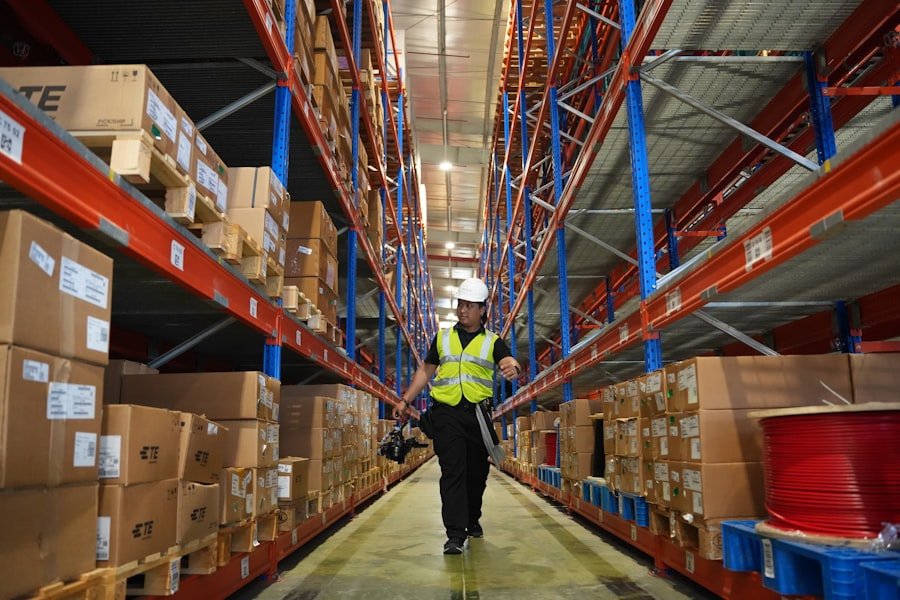
Operators & personnel working around lifting & handling equipment must utilize appropriate PPE, including:. Helmets for safety: To guard against falling objects. Wearing safety shoes can help prevent crushing injuries.
Gloves: For better grip & hand protection. High-Visibility Clothes: To guarantee visibility in crowded workspaces. competency and training. All employees who operate or work near lifting and handling equipment must be qualified for their positions and have received sufficient training.
This involves comprehending. Proper startup, movement, & shutdown procedures are all part of equipment operation. Load Capacity Restrictions: Never go over the equipment’s or rigging’s rated capacity. Proper selection and application of slings, shackles, & other lifting equipment are examples of rigging practices. Emergency protocols: What to do in the event of an unforeseen circumstance, like an accident or equipment failure.
The ballet won’t turn into a wild free-for-all when the unexpected happens thanks to thorough training. upkeep & examination. Preventing failures requires routine maintenance & inspection of all lifting and handling equipment. Regular Inspections: Every day, operators visually inspect the area for wear or obvious damage.
Scheduled Maintenance: Regular inspections and lubrications carried out by skilled technicians. Load Testing: Testing lifting equipment on a regular basis to ensure that it can support a safe working load. These routine examinations help to maintain the best possible health for these mechanical athletes. As more efficiency, safety, & automation are sought after, the lifting & handling industry is always changing.
Automation and robotics. Automation is a big trend, as was indicated with AGVs and AMRs. Advanced robotic arms can now perform intricate assembly and material manipulation tasks that were previously completed by humans.
This lessens the risk of repetitive strain injuries and frees up human workers to concentrate on more important, less physically taxing tasks. The objective is to develop a smooth, intelligent workflow in which machines complement human abilities rather than take their place. sophisticated sensing & control systems. For accurate positioning, load monitoring, and obstacle avoidance, modern lifting and handling systems use sophisticated sensors. Smoother operations, more precise maneuvering, & increased energy efficiency are all made possible by sophisticated control algorithms.
These technologies enable real-time adjustments and optimal performance by functioning as the equipment’s intelligent nervous system. predictive maintenance & data analytics. The integration of sensors also makes it possible to gather enormous volumes of data regarding the performance of the equipment. Predictive maintenance, in which possible problems are found and fixed before they result in malfunctions, is made possible by analyzing this data.
This increases equipment lifespan and reduces downtime by changing maintenance from a reactive to a proactive approach. It’s similar to having a doctor who can foresee a disease before any symptoms show up. Human-machine interaction & ergonomics. As automation grows, efforts are being made to make manual & semi-automated lifting tasks more ergonomic. Creating devices that lessen the physical strain on operators and creating user-friendly interfaces for complex system control are two examples of this.
The goal is to create a cooperative atmosphere where people and machines coexist peacefully. Even more integration of intelligence, sustainability, and adaptability is indicated by the development of lifting and handling systems. Greater independence and cooperation. More intelligent and adaptable logistics operations will result from the ongoing development of AMRs.
Collaborative robots, or cobots, that can safely operate alongside human operators & augment their capabilities rather than isolate them will be given more attention. Imagine a group of diligent, extremely talented assistants who work in perfect sync with their human counterparts. Increased Energy Efficiency and Sustainability. There will be a push for more energy-efficient lifting and handling solutions due to growing environmental concerns.
This includes the creation of hybrid and electric machinery as well as improved operational techniques to reduce energy usage. The goal will be to lessen these crucial industrial processes’ negative environmental effects. The use of digital twins and smart warehouses. The idea of “smart warehousing” entails fully automating and digitizing warehouse operations.
Digital twins—virtual copies of real assets and operations—are frequently used in this, enabling lifting and handling system simulation, optimization, & remote monitoring. This offers a strong foundation for innovation & ongoing development. Monitoring and operations from a distance. More reliable remote operation & monitoring of lifting and handling equipment will be made possible by developments in communication technologies, such as 5G. Maintenance, troubleshooting, and even operator deployment may be affected by this, especially in environments that are dangerous or inaccessible.
Becoming “on-site” will become a more flexible concept.
.
FAQs
What are lifting and handling systems?
Lifting and handling systems are mechanical devices or equipment designed to move, lift, or position heavy loads safely and efficiently in various industrial, construction, or warehouse settings.
What types of lifting and handling systems are commonly used?
Common types include cranes, hoists, forklifts, conveyor systems, pallet jacks, and robotic arms, each suited for different load capacities and operational environments.
What safety measures should be followed when using lifting and handling systems?
Safety measures include proper training for operators, regular equipment inspections, adherence to load limits, use of personal protective equipment (PPE), and following manufacturer guidelines and industry regulations.
How do lifting and handling systems improve workplace efficiency?
These systems reduce manual labor, minimize the risk of injury, speed up material movement, and enable precise handling of heavy or awkward loads, thereby increasing overall productivity.
What factors should be considered when selecting a lifting and handling system?
Key factors include the weight and size of loads, frequency of use, working environment, available space, budget, and compliance with safety standards and regulations.